Launch Countdown:
Caelus Program

Electromagnetic-Assisted Launch Architecture
Caelus is Michigan Space Technologies’ flagship launch architecture, focused on making access to space more affordable, responsive, and scalable through ground-based electromagnetic acceleration.
Traditional launch systems rely almost entirely on onboard propulsion to lift a vehicle from rest, overcome gravity, fight through the atmosphere, and accelerate toward space. Caelus approaches the problem differently. By using a ground-based electromagnetic launch-assist system, Caelus is designed to provide the vehicle with significant initial acceleration before it transitions into flight. This approach has the potential to reduce the burden placed on onboard propulsion, improve launch responsiveness, and open new pathways for more flexible space access.
At its core, Caelus is built around a simple idea: not every part of the launch energy problem needs to be carried onboard the vehicle. By shifting a portion of the acceleration work to reusable ground infrastructure, the system is intended to reduce the cost and complexity associated with each launch event over time.
How Caelus Works at a High Level
Caelus uses electromagnetic acceleration along a guided launch path to assist a specially designed vehicle during the earliest and most energy-intensive phase of launch. The vehicle travels through a controlled launch environment that supports alignment, acceleration, and transition into flight.
As the vehicle moves along the launch path, electromagnetic forces provide controlled acceleration. Once the vehicle exits the accelerator, it continues along the launch angle with high initial velocity. In future operational configurations, this launch-assist approach may be paired with additional propulsion, mission-specific vehicle designs, or follow-on flight systems depending on the mission profile.
The public concept is intentionally straightforward: Caelus is not just a vehicle and not just a track. It is an integrated launch architecture combining ground infrastructure, vehicle design, power systems, control logic, and mission planning into a reusable platform intended to support the next generation of responsive aerospace operations.
Why Electromagnetic Launch Assist Matters
The economics of space access are shaped by mass, fuel, infrastructure, launch cadence, and operational complexity. Caelus is being developed to address several of these challenges at once.
By providing a portion of launch acceleration from the ground, Caelus may help reduce the propulsion demand placed on the vehicle itself. This can support more efficient mission architectures and may create opportunities for smaller, more specialized vehicles designed around rapid launch and repeatable operations.
Caelus is also being developed with responsiveness in mind. Future space missions increasingly require flexibility: faster timelines, distributed operations, rapid testing, and launch concepts that are not limited by traditional infrastructure models. A reusable electromagnetic launch-assist architecture offers a potential path toward more frequent and adaptable launch operations.
Key Public-Facing Advantages
Reduced Cost Barrier
Caelus is designed around reusable ground-based acceleration infrastructure, which may help reduce the cost burden associated with conventional launch approaches over time.
Responsive Launch Potential
The system is being developed with future responsive operations in mind, supporting faster preparation cycles and more flexible mission planning.
Ground-Based Energy Contribution
By shifting part of the acceleration requirement to the ground system, Caelus explores a different way to approach the launch energy problem.
Scalable Architecture
The Caelus concept is intended to evolve through subscale testing, data collection, design refinement, and progressively larger demonstrations.
Dual-Use Aerospace Applications
Publicly, Caelus is relevant to commercial space access, research payloads, test infrastructure, advanced aerospace development, and future transportation concepts.
Development Approach
Michigan Space Technologies is developing Caelus through a step-by-step engineering pathway. The program begins with subscale demonstration, modeling, component validation, and controlled testing. These early efforts are intended to prove the core physics, gather useful data, evaluate system behavior, and guide the design of future larger-scale configurations.
This phased approach allows MiST to mature the technology responsibly while reducing technical risk. Each stage of development is focused on learning, validating, and improving the system before advancing to more complex demonstrations.
Caelus is not being presented as a finished operational launch system today. It is an emerging launch architecture under development, built around a long-term vision: to make space access more affordable, more responsive, and more attainable.
Built from Michigan for the Future of Space
Caelus reflects the spirit of Michigan engineering: bold ideas, practical systems, and a belief that hard things can be built here. From Detroit’s manufacturing legacy to Michigan’s modern mobility, automation, aerospace, and advanced technology ecosystem, the state has the industrial DNA needed to support a new generation of space infrastructure.
Michigan helped define the age of mobility on Earth. Caelus is part of MiST’s effort to help define the next era of mobility beyond it.
The Vision
The long-term vision for Caelus is to help change the economics and accessibility of launch. If space is going to become a true operating domain for science, industry, exploration, defense, and human expansion, launch systems must become more flexible, more frequent, and more affordable.
Caelus is being built toward that future.
By combining electromagnetic launch assist, advanced vehicle concepts, intelligent control systems, and reusable infrastructure, Caelus represents MiST’s flagship effort to bring space closer to reach.
Bringing Space Home.
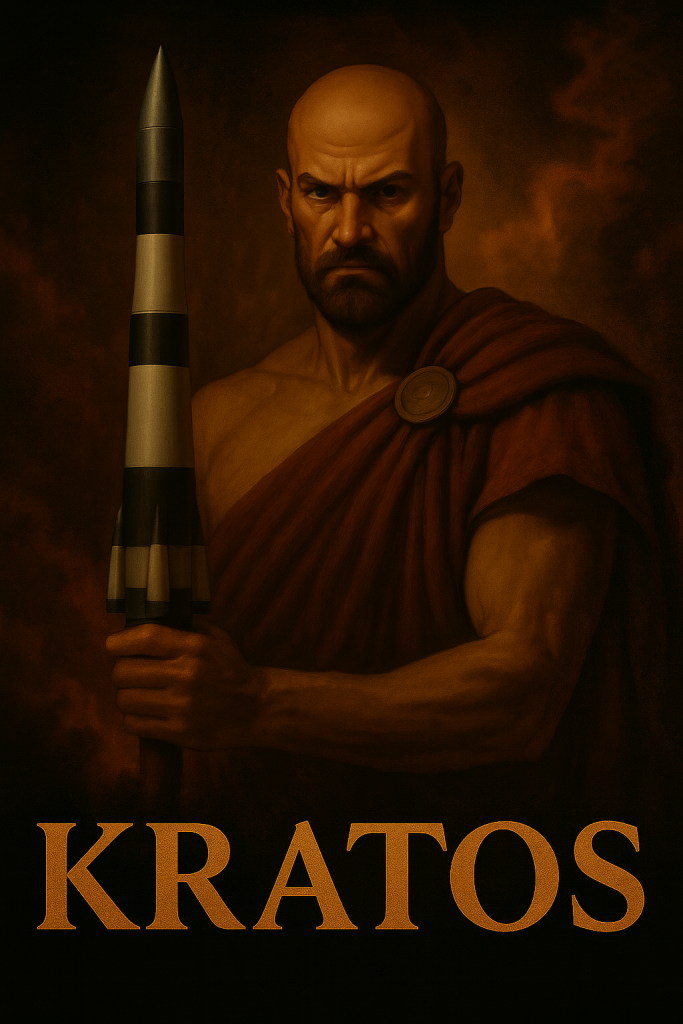
KRATOS Rocket
Rapid-Launch Chemical Rocket Systems
KRATOS is Michigan Space Technologies’ rapid-launch chemical rocket program, developed to support flexible small-class launch applications, responsive mission concepts, test support, and future aerospace operations.
While Caelus represents MiST’s long-term electromagnetic-assisted launch architecture, KRATOS provides a more traditional but highly adaptable launch pathway built around chemical propulsion, modular mission design, and infrastructure-light operations. The program is intended to support the growing need for faster, more flexible access to aerospace test environments, payload deployment opportunities, and mission-specific launch services.
KRATOS is being developed as part of a broader MiST technology ecosystem that includes mobile launch infrastructure, separation systems, and thermal protection concepts. Together, KRATOS, PΛLΛMEDΞS, ExoLink, and ExoTherm represent a connected family of technologies focused on making launch more responsive, more adaptable, and more accessible.
A Flexible Launch Platform for Emerging Mission Needs
The space economy is changing. Commercial customers, government agencies, universities, defense organizations, and research teams increasingly need launch solutions that are not limited to large, infrequent, one-size-fits-all missions.
KRATOS is being developed to address that gap.
The program is focused on small-class launch and mission support concepts that can be adapted for different payloads, flight profiles, test requirements, and operational timelines. Rather than treating launch as a rigid, centralized process, KRATOS is designed around flexibility: the ability to support different missions, locations, and customer needs through a more responsive launch architecture.
Publicly, KRATOS can be understood as MiST’s chemical rocket pathway — a practical and scalable launch program designed to complement the company’s longer-term electromagnetic launch work while supporting nearer-term aerospace applications.
How KRATOS Fits into MiST’s Launch Ecosystem
KRATOS is not being developed in isolation. It is part of MiST’s larger approach to launch, mobility, and aerospace infrastructure.
KRATOS provides the chemical rocket platform and launch vehicle foundation.
PΛLΛMEDΞS serves as the mobile launch platform concept designed to support fieldable, infrastructure-light launch operations.
ExoLink is MiST’s low-cost, expendable, launch-agnostic space separation system concept, intended to support payload separation needs across compatible mission architectures.
ExoTherm is MiST’s thermal protection and reentry-focused technology concept, supporting future mission areas where heat management and survivability are critical.
Together, these programs support a broader vision: building not just individual products, but an integrated launch and mission support ecosystem.
PΛLΛMEDΞS: Mobile Launch Infrastructure
A key part of the KRATOS concept is PΛLΛMEDΞS, MiST’s mobile launch platform.
PΛLΛMEDΞS is designed around the idea that future launch operations should not always require large, fixed, traditional launch infrastructure. By developing mobile and adaptable launch support systems, MiST is working toward launch concepts that can be more flexible, more distributed, and more responsive to mission needs.
For KRATOS, PΛLΛMEDΞS provides a path toward infrastructure-light operations, supporting the long-term goal of making small-class launch more practical and accessible for a wider range of customers and locations.
Why KRATOS Matters
Traditional launch systems have achieved extraordinary results, but they often come with high cost, long scheduling cycles, and significant infrastructure requirements. KRATOS is being developed with a different operating philosophy: launch should become more adaptable, more responsive, and more aligned with the needs of modern aerospace customers.
The program is focused on several public-facing advantages:
Responsive Mission Support
KRATOS is being designed to support faster and more flexible launch planning for small-class aerospace missions.
Infrastructure-Light Operations
When paired with PΛLΛMEDΞS, KRATOS supports MiST’s vision for launch operations that are less dependent on large fixed facilities.
Flexible Payload Applications
The KRATOS architecture is intended to support different payload concepts, test missions, and mission-specific configurations.
Complementary Launch Pathway
KRATOS complements Caelus by giving MiST a traditional chemical rocket program alongside its electromagnetic-assisted launch architecture.
Integrated System Growth
KRATOS connects naturally with ExoLink, ExoTherm, PΛLΛMEDΞS, and C3Po as part of MiST’s broader aerospace technology roadmap.
ExoLink and ExoTherm
KRATOS also creates a natural development pathway for MiST’s supporting space systems.
ExoLink is MiST’s low-cost, expendable, launch-agnostic space separation system concept. It is being developed around the need for simple, reliable, adaptable separation solutions that can support different payload and mission architectures.
ExoTherm is MiST’s thermal protection technology concept, focused on future applications where payloads, vehicles, or mission components may need improved heat management, survivability, or reentry-related protection.
These programs support the broader KRATOS ecosystem by addressing key mission needs beyond propulsion alone. Launch is not only about getting a vehicle off the ground. It also requires payload integration, separation, survivability, mission planning, and operational support.
Built for Practical Development
KRATOS is being developed through a phased engineering approach focused on responsible maturation, technical validation, and mission-driven design. Early development efforts are centered on refining system architecture, validating core design assumptions, evaluating manufacturability, and preparing for progressively more advanced testing.
MiST’s approach is deliberately practical. The goal is not to overpromise an operational launch system before the technology has matured. Instead, KRATOS is being built step by step, with each phase intended to reduce risk, improve the design, and move the program closer to real-world aerospace applications.
A Michigan-Built Launch Program
KRATOS reflects MiST’s belief that Michigan has a role to play in the future of launch.
Michigan’s legacy is built on manufacturing, mobility, engineering, production discipline, and industrial problem-solving. From Detroit’s automotive heritage to the state’s broader advanced manufacturing base, Michigan has long been a place where complex systems become real machines.
KRATOS carries that spirit into aerospace.
It is a launch program built around practical engineering, adaptable infrastructure, and the belief that the next era of space access will require more than one approach. Chemical rockets, electromagnetic acceleration, mobile platforms, AI mission systems, separation systems, and thermal protection technologies all have roles to play in making space more accessible.
The Vision
The long-term vision for KRATOS is to support a more responsive and flexible launch ecosystem: one where small-class missions can be planned, supported, and executed with greater agility.
By combining chemical rocket systems with mobile launch infrastructure, payload support technologies, and intelligent mission planning, KRATOS is part of MiST’s effort to reduce barriers, expand access, and help build the next generation of aerospace capability.
KRATOS is more than a rocket program. It is a step toward launch systems that are faster, more flexible, and more connected to the future MiST is building.
Bringing Space Home.
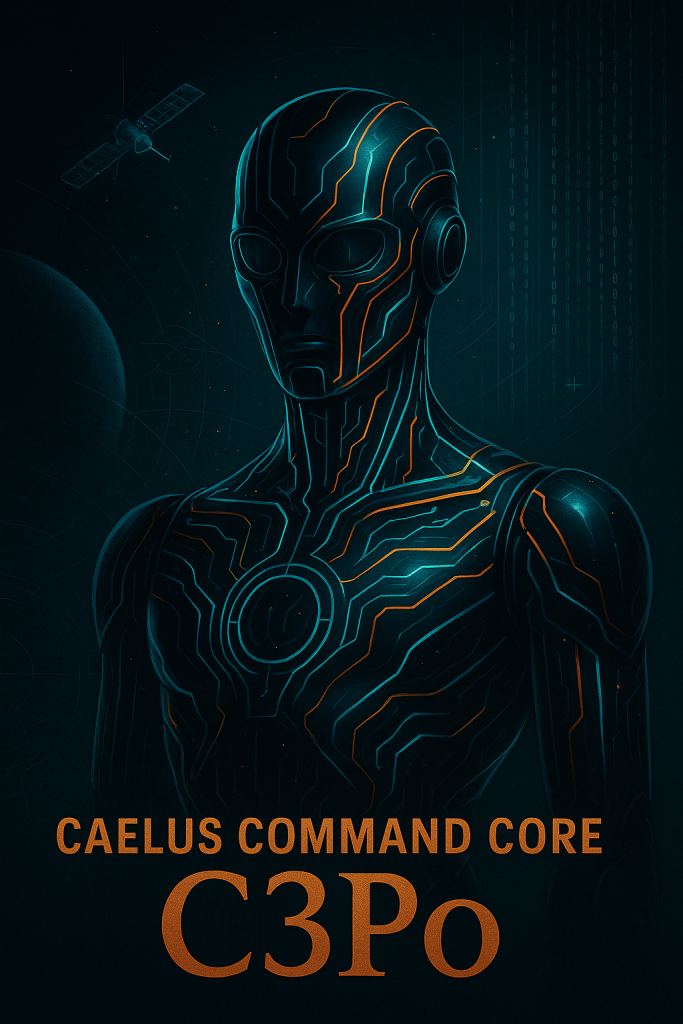
C3Po Command and Control
AI-Powered Mission Planning and Launch Operations Intelligence
C3Po is Michigan Space Technologies’ AI-powered mission planning and operational decision-support system, developed to support more efficient, repeatable, and data-driven aerospace operations.
While Caelus and KRATOS focus on launch architecture, propulsion, and physical aerospace systems, C3Po is designed to become the intelligent software layer that helps those systems operate more effectively over time. As MiST’s launch programs mature and generate real-world test data, C3Po is intended to use that information to support better planning, faster analysis, improved repeatability, and reduced operational risk.
C3Po is not being developed as a replacement for human leadership or engineering judgment. Instead, it is being designed as a human-centered AI system that can reduce workload, identify patterns, support decision-making, and help minimize the types of avoidable errors that can occur in complex launch environments.
Built Around Data-Driven Launch Operations
Modern aerospace systems generate enormous amounts of data. Test results, vehicle behavior, environmental conditions, launch preparation steps, system checks, sensor inputs, mission constraints, and operational timelines all create information that must be understood quickly and accurately.
C3Po is being developed to help organize that information into actionable intelligence.
At a high level, the system is intended to support data fusion, mission planning, predictive analysis, anomaly awareness, and workflow automation. By combining operational data with AI-enabled analysis tools, C3Po can help teams better understand system performance, evaluate launch readiness, and improve future operations.
As Caelus, KRATOS, and related MiST technologies progress through testing and development, C3Po is envisioned as the software backbone that learns from those results and helps turn engineering data into better launch decisions.
Reducing Human Error Without Removing Human Control
Launch operations involve many moving parts: people, equipment, timing, checklists, environmental variables, mission requirements, and system constraints. In complex environments, even highly capable teams can face information overload.
C3Po is designed to reduce that burden.
By assisting with planning, monitoring, documentation, and decision support, C3Po can help reduce human error while keeping humans in control of final decisions. The goal is not full autonomy for its own sake. The goal is to make launch operations more consistent, transparent, and repeatable.
Publicly, C3Po can be understood as an AI copilot for aerospace operations: a system that helps teams move faster, see more clearly, and make better-informed decisions.
Artificial Intelligence for Repeatable Aerospace Workflows
C3Po is being developed around a modern AI architecture that may incorporate machine learning, generative AI, predictive analytics, digital twin concepts, automated reporting, data fusion, and decision-support workflows.
These tools can support a wide range of launch and aerospace activities, including:
Mission Planning
Supporting launch preparation, mission sequencing, and operational planning through AI-assisted workflows.
Readiness Assessment
Helping organize system data, test results, and operational inputs into a clearer picture of launch readiness.
Predictive Analysis
Using historical and test-derived data to identify trends, potential concerns, and performance patterns.
Digital Twin Integration
Supporting future simulated operating environments where system behavior can be modeled, compared, and refined.
Anomaly Awareness
Helping teams identify unusual behavior, unexpected data, or deviations from expected performance.
Automated Documentation
Reducing administrative workload through AI-supported reports, summaries, checklists, and operational records.
Decision Support
Providing structured insights to support human decision-makers before, during, and after launch operations.
Making Launch More Efficient, Repeatable, and Faster
The long-term value of C3Po is operational speed and consistency.
A launch system is only as useful as the organization’s ability to prepare, execute, learn, and repeat. C3Po is designed to support that cycle by helping MiST capture data, analyze results, refine procedures, and improve future missions.
Over time, this type of AI-enabled operational layer can help reduce delays, improve coordination, standardize best practices, and create a more scalable launch process.
For Caelus, C3Po may support electromagnetic launch planning, test data analysis, system readiness workflows, and performance learning across repeated demonstrations.
For KRATOS, C3Po may support launch preparation, mission planning, operational coordination, payload-related workflows, and post-mission review.
Across MiST’s broader technology ecosystem, C3Po is intended to help connect physical aerospace systems with intelligent software-driven operations.
Human-Centered AI for Aerospace
C3Po is being developed with a human-centered philosophy. Aerospace operations require accountability, engineering judgment, and disciplined decision-making. AI can support those processes, but it should not obscure them.
The system is envisioned as an assistant, analyst, planner, and operational knowledge layer that works alongside human teams. It can help bring the right information forward, reduce repetitive workload, flag potential concerns, and improve the speed of analysis.
This approach allows MiST to pursue AI-enabled operations while maintaining a clear focus on safety, transparency, and responsible system development.
Why C3Po Matters
The future of launch will not be defined only by rockets, vehicles, and infrastructure. It will also be defined by software.
As launch systems become more responsive, mobile, distributed, and data-rich, operators will need intelligent tools that can help them manage complexity. C3Po is being developed to meet that need.
Its purpose is to make launch operations:
More Efficient
By reducing manual workload and streamlining mission planning workflows.
More Repeatable
By capturing lessons learned, standardizing procedures, and supporting consistent execution.
Faster
By helping teams analyze information, prepare missions, and respond to operational needs more quickly.
More Data-Driven
By turning test data, mission data, and system inputs into actionable intelligence.
Less Error-Prone
By helping reduce preventable mistakes caused by information overload, missed steps, or fragmented data.
A Later-Stage System Built from Real Program Data
C3Po is intended to mature alongside MiST’s physical launch programs. As Caelus, KRATOS, PΛLΛMEDΞS, ExoLink, and other systems develop, they will generate the operational data needed to make C3Po increasingly useful.
This is an important part of the program’s strategy. C3Po is not simply a generic AI concept placed on top of aerospace operations. It is intended to become a MiST-specific intelligence layer shaped by real launch development, real test results, real engineering workflows, and real operational lessons.
That makes C3Po a long-term force multiplier for MiST’s launch ecosystem.
The Vision
The long-term vision for C3Po is to help create a smarter, faster, and more repeatable launch enterprise.
By combining AI-assisted planning, data fusion, digital twin concepts, predictive analytics, and operational decision support, C3Po is being developed to help MiST reduce complexity and improve launch execution as its aerospace systems mature.
Caelus and KRATOS represent the physical path to more responsive space access. C3Po represents the intelligent layer that helps make that future operationally possible.
Bringing Space Home.